
Free Guides To Our Home Health Tests
Find out what each test measures, who it may help and what your result can and can't tell you. Choose a guide and we'll email you a free copy.

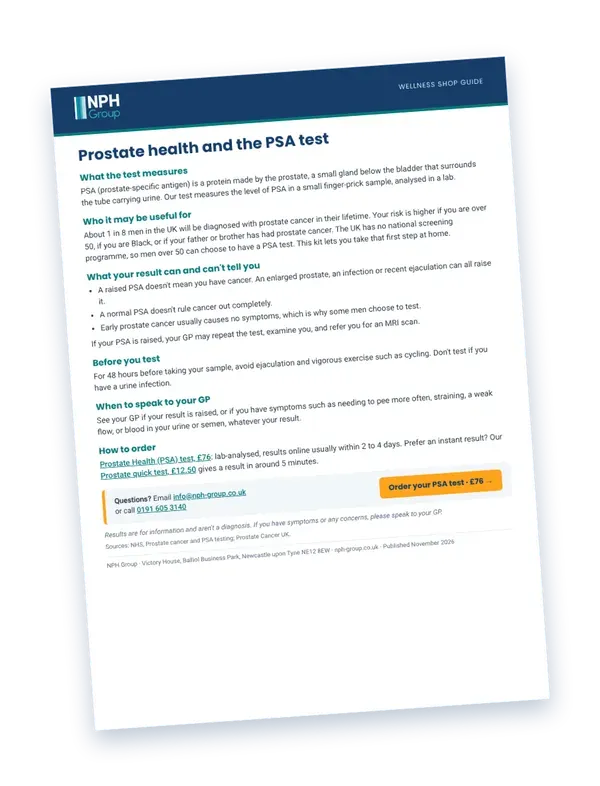
Prostate health and the PSA test
PSA is a protein made by the prostate. This free guide explains who the test may help, why a raised result doesn't always mean cancer, what to avoid in the 48 hours before you test, and when to speak to your GP. Click the button to receive your free copy.
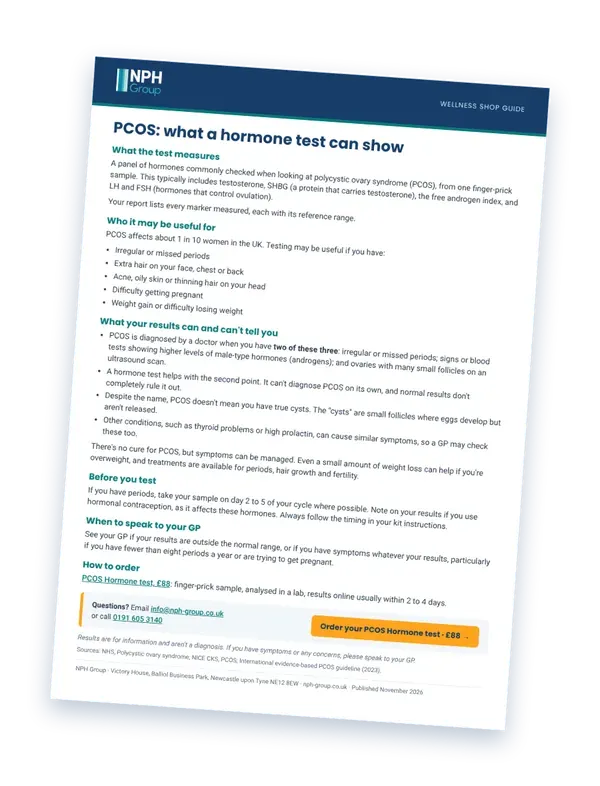
PCOS: what a hormone test can show
PCOS affects about 1 in 10 women in the UK. The guide explains which hormones the test checks, why a hormone test alone can't diagnose PCOS, and when in your cycle to take your sample. Click the button to receive your free copy.
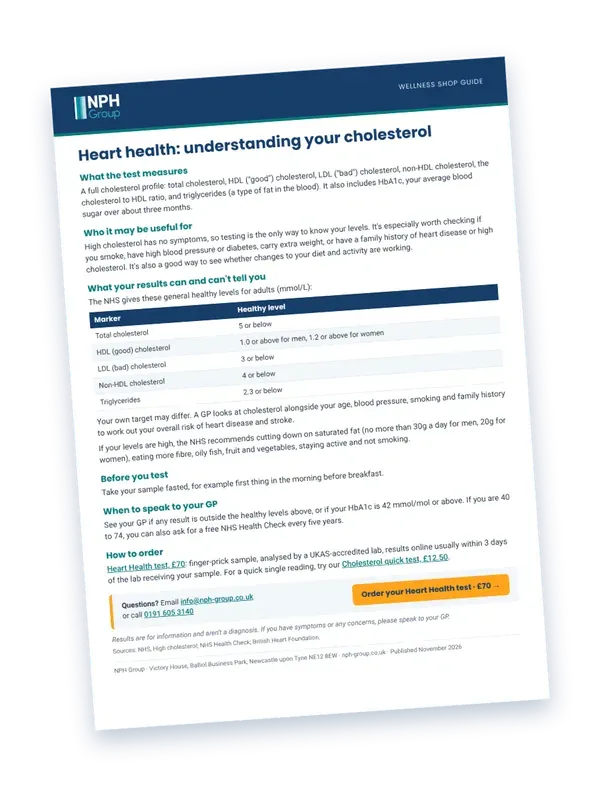
Heart health: understanding your cholesterol
High cholesterol has no symptoms, so testing is the only way to know your levels. The guide explains each part of your cholesterol profile, how to prepare for the test and when to speak to your GP. Click the button to receive your free copy.
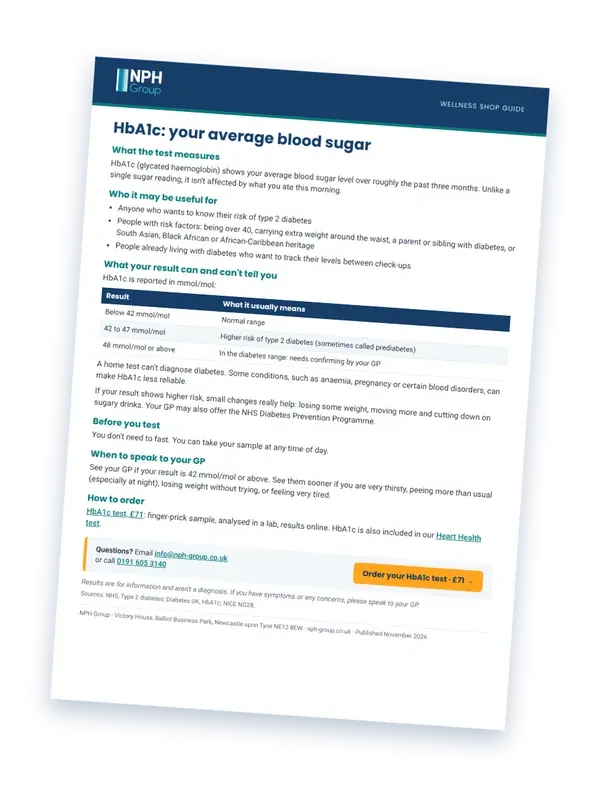
HbA1c: your average blood sugar
HbA1c shows your average blood sugar over about three months, so it isn't affected by what you ate this morning. The guide explains what your result means, who is most at risk of type 2 diabetes, and what to do next. Click the button to receive your free copy.
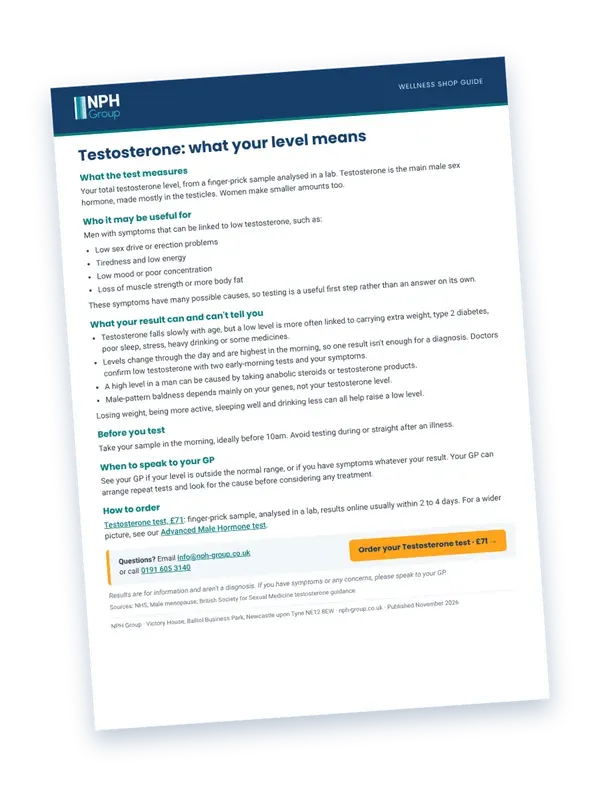
Testosterone: what your level means
Tiredness, low sex drive and low mood can have many causes, and low testosterone is one of them. The guide explains what your level shows, why to test in the morning, and when to speak to your GP. Click the button to receive your free copy.
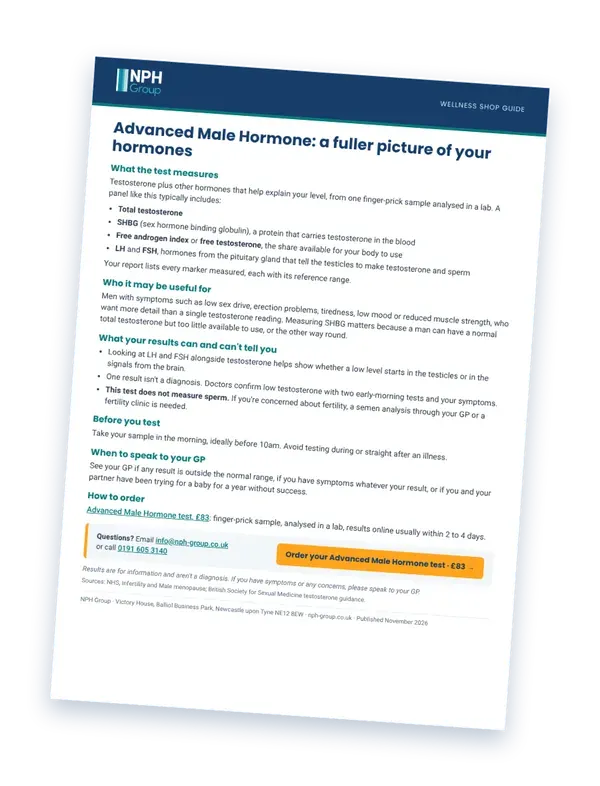
Advanced Male Hormone: a fuller picture of your hormones
Testosterone plus SHBG, LH and FSH from one sample, for more detail than a single testosterone reading. The guide explains what each hormone shows and what to do if a result is outside the normal range. Click the button to receive your free copy.
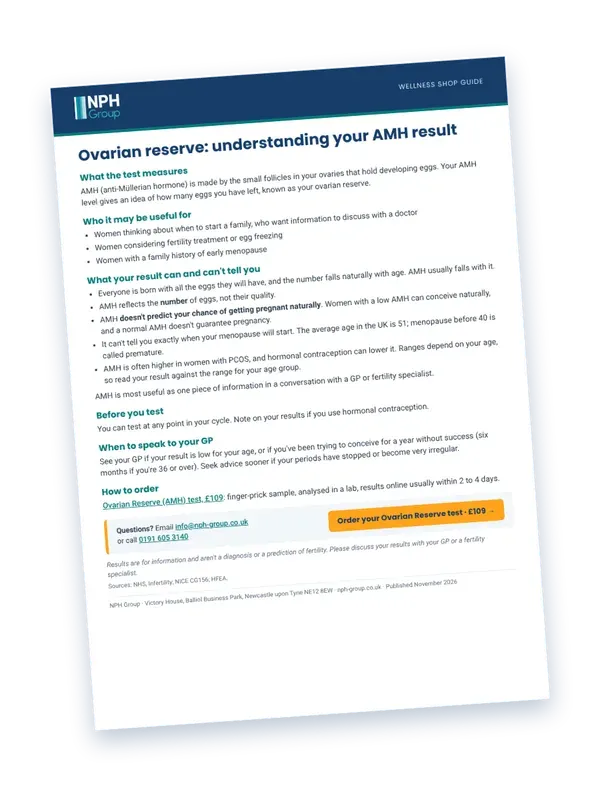
Ovarian reserve: understanding your AMH result
AMH gives an idea of how many eggs you have left. The guide explains what it can and can't tell you, including why it doesn't measure egg quality or your chance of conceiving naturally, and when to talk to a doctor or fertility specialist. Click the button to receive your free copy.
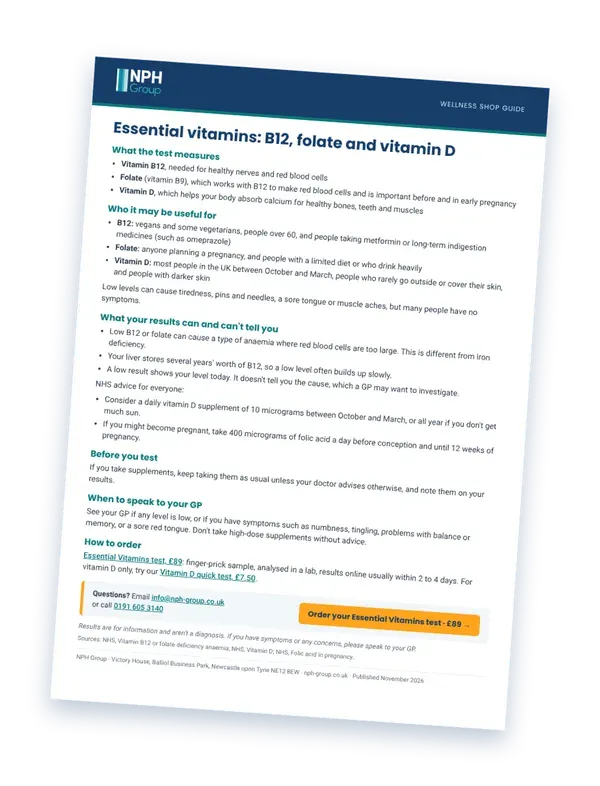
Essential vitamins: B12, folate and vitamin D
Low levels can cause tiredness, pins and needles or muscle aches, but many people have no symptoms. The guide explains who is most likely to run low, what your results mean, and when to speak to your GP. Click the button to receive your free copy.
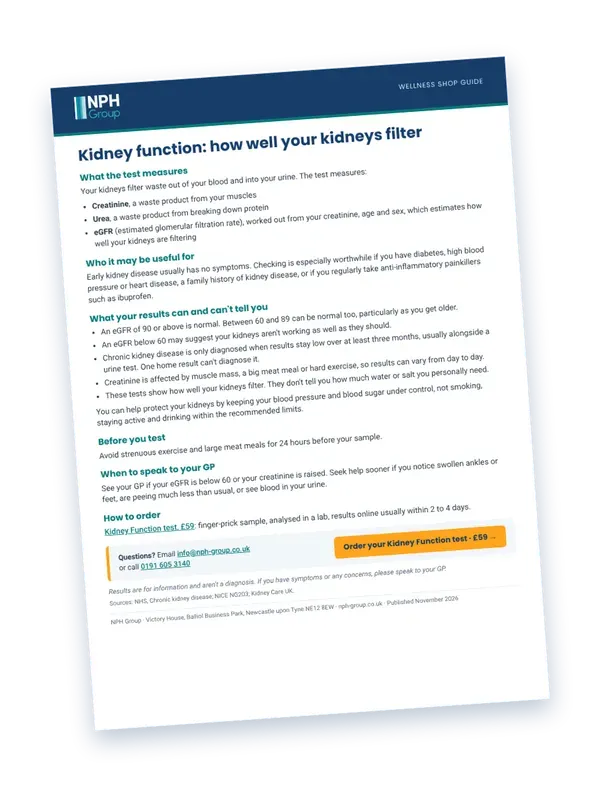
Kidney function: how well your kidneys filter
Early kidney disease usually has no symptoms. The guide explains what creatinine, urea and eGFR measure, who should consider checking, and what to do if your result is outside the normal range. Click the button to receive your free copy.
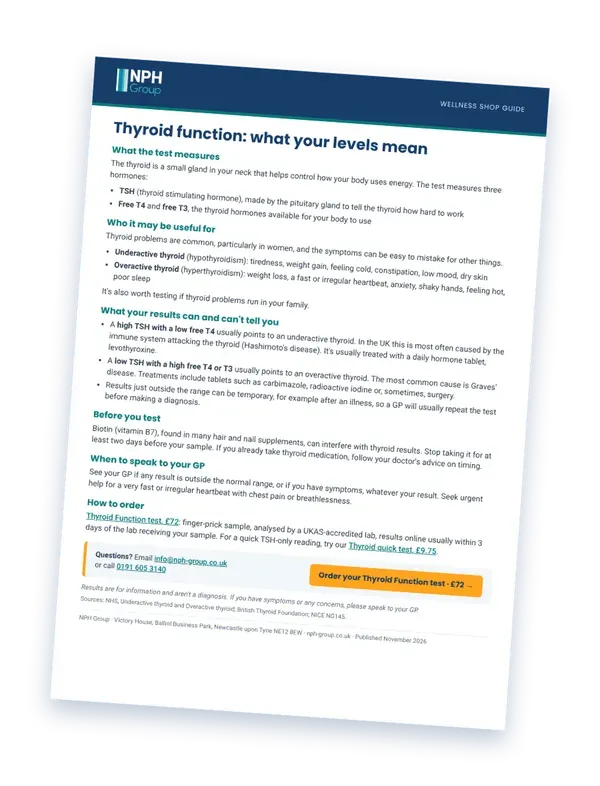
Thyroid function: what your levels mean
Thyroid problems are common and easy to mistake for other things. The guide explains what TSH, free T4 and free T3 show, the signs of an underactive or overactive thyroid, and why to stop biotin supplements before you test. Click the button to receive your free copy.
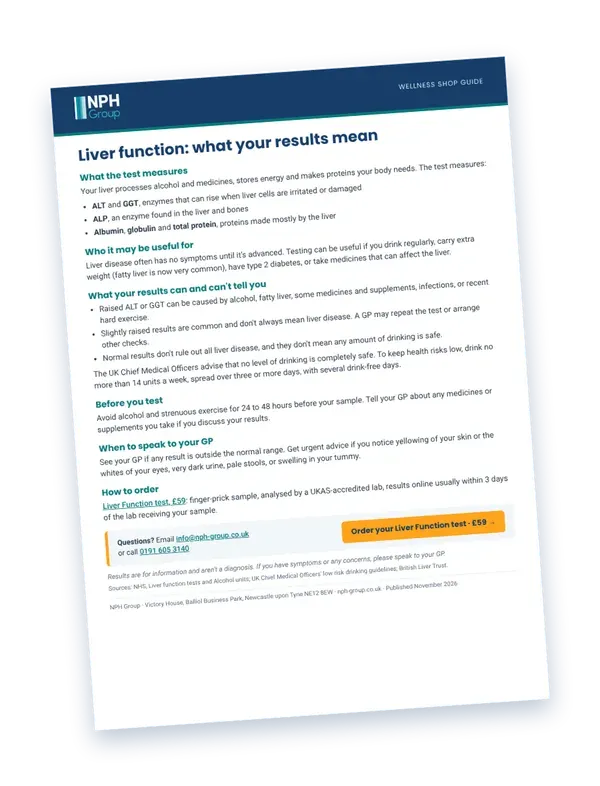
Liver function: what your results mean
Liver disease often has no symptoms until it's advanced. The guide explains what each liver marker shows, who may benefit from testing, and how to prepare, including avoiding alcohol beforehand. Click the button to receive your free copy.
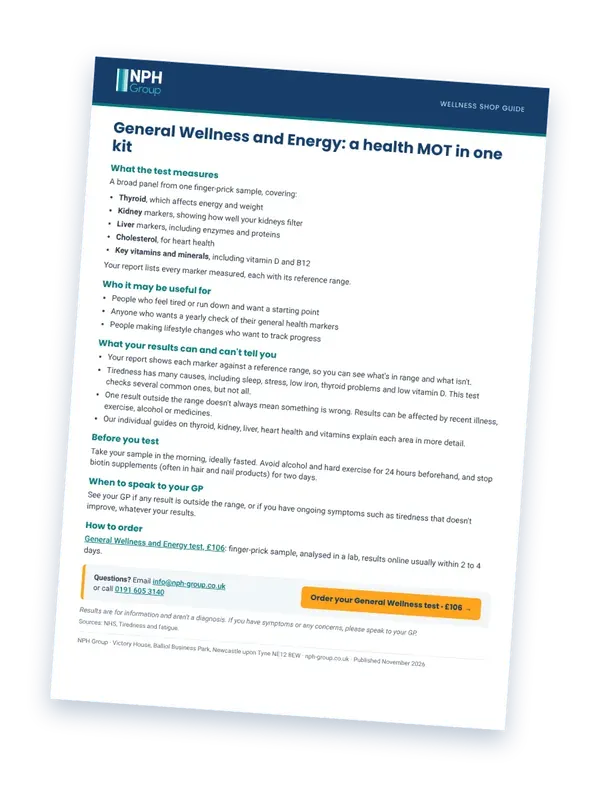
General Wellness and Energy: a health MOT in one kit
One finger-prick sample covering thyroid, kidney, liver, cholesterol and key vitamins. The guide explains what each group of markers shows, how to prepare, and what to do with your results. Click the button to receive your free copy.
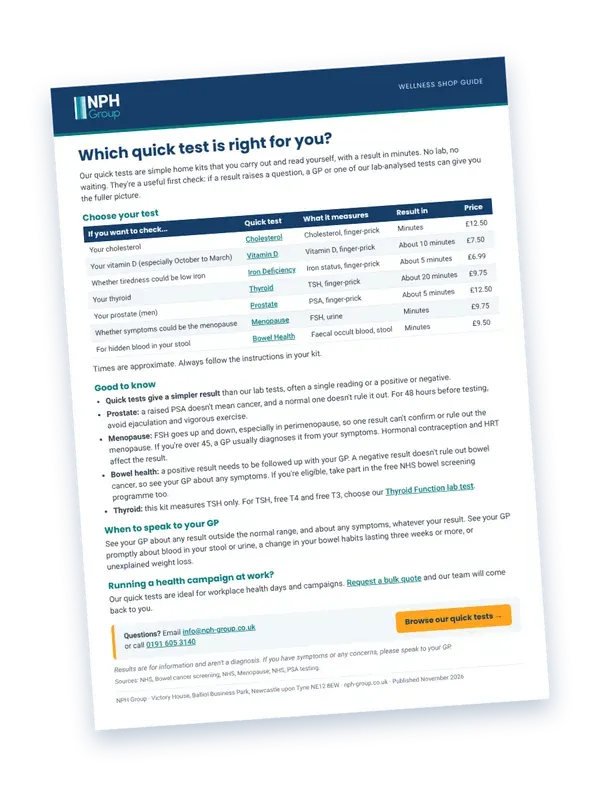
Which quick test is right for you?
Our quick tests are simple home kits you carry out and read yourself, with a result in minutes. The guide compares all seven, explains what each result can and can't tell you, and when to speak to your GP. Click the button to receive your free copy.

NPH Group © 2026